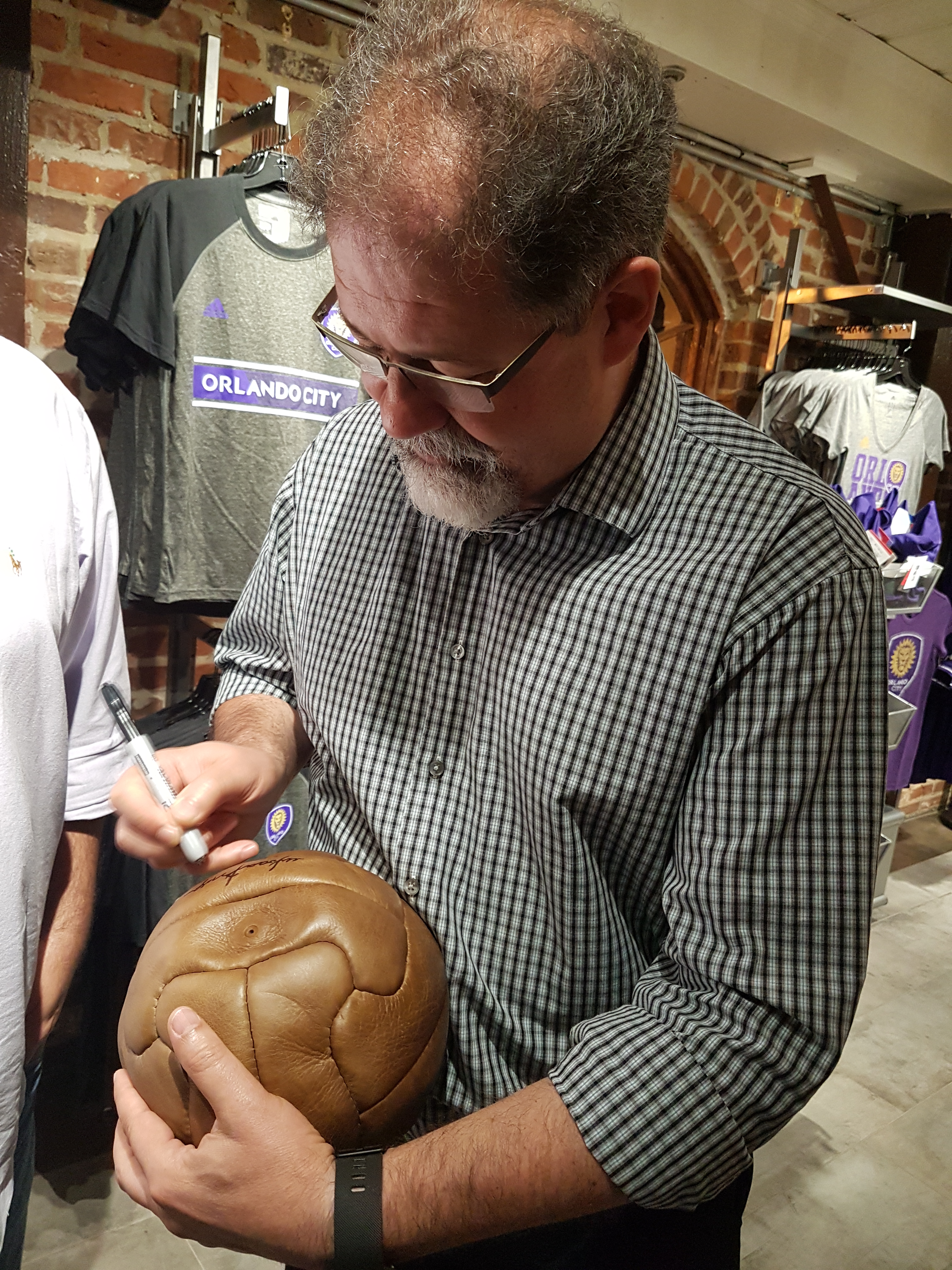
 I’ve just autographed a piece of history: the ball with which the final of the 1950 World Cup was played.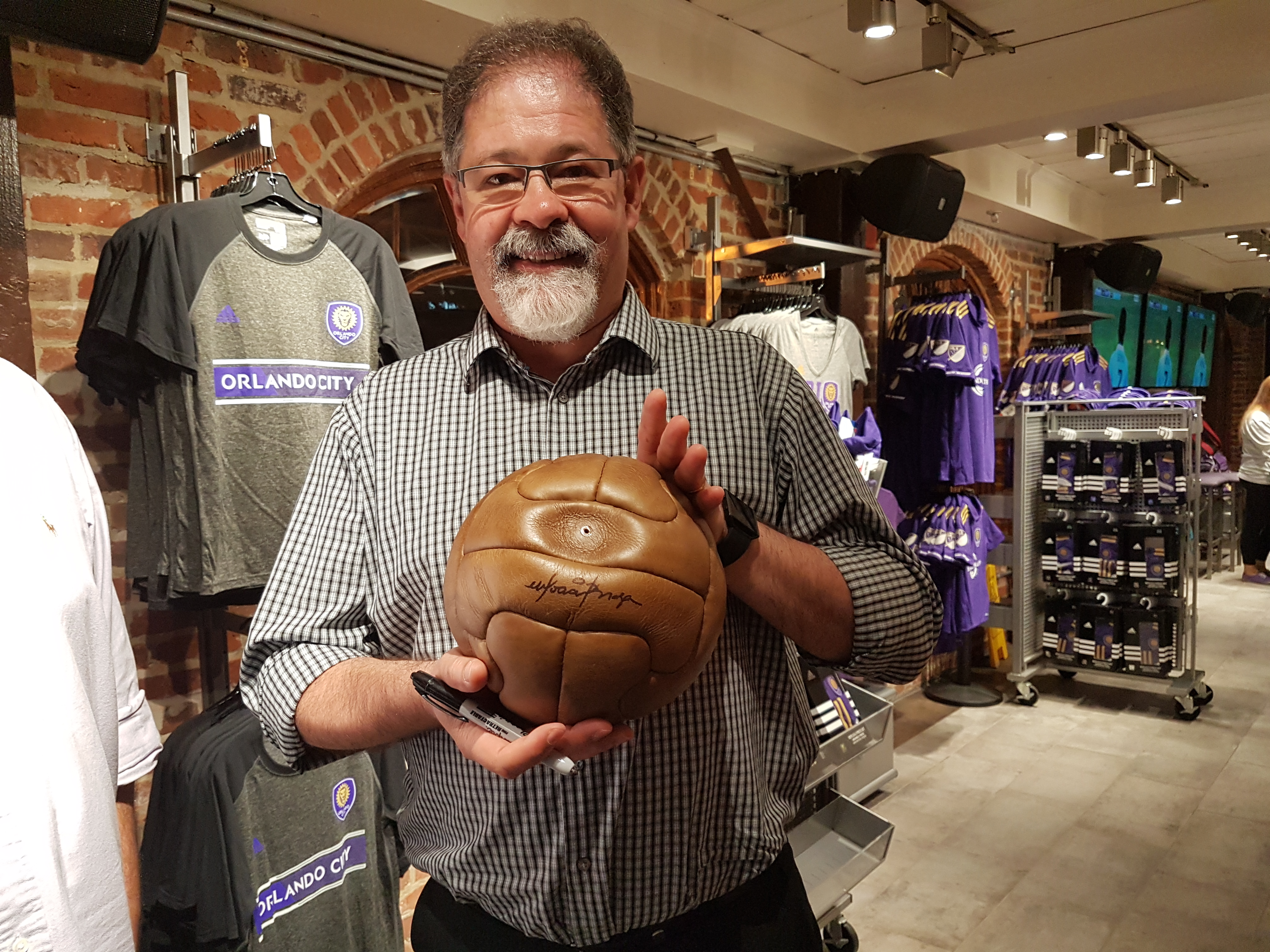
What? How come?
First, for the records, the signature took place at about 9pm on June 11th 2017, at the Lion’s Pride, the super soccer-pub at Church Street, Orlando, FL, USA. Thank you to Gustavo Fonseca, the Lion’s Pride owner and to Ronaldo Camargo, my old friend from teen-ages ago, who knew about my family’s involvement with Superball.
Superball’s History
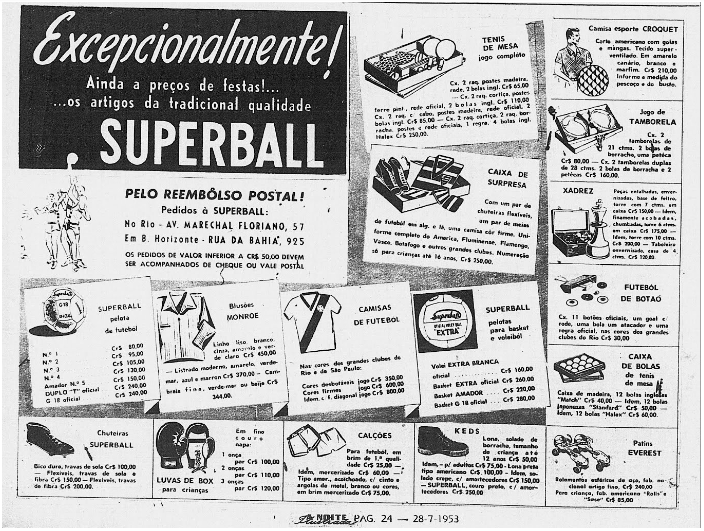 Long before I was born in 1955, there was this Brazilian company manufacturing and selling sporting goods, called Superball (Cia. Brasileira de Equipamentos Esportivos S.A.). It was originally a carioca-fluminense small network of shops and factories located in Rio de Janeiro (at Avenida Marechal Floriano), Petropolis (at Rua General Osorio), and Niteroi (at Rua Jose Clemente). Still before my birth in 1955, a spun-off of the commercial and industrial facilities was founded in Belo Horizonte,
 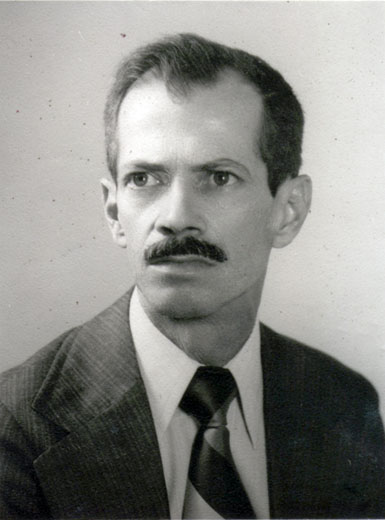 Minas Gerais state, my birth place. The shop was called Superball Minas Gerais S.A. (located at Rua da Bahia) and the factory Fabrica de Equipamentos Esportivos de Minas Gerais S.A. (located at Rua Pouso Alegre, at the Horto borough, less than a kilometer from the Independencia Arena). My father, Oswaldo Braga (photo), became a director of the Mineiro part of the business, in association with Dr. Edgar Leite de Castro and Joao Evangelista.
With the mission to implement the Horto balls factory of Superball, they brough over all the way from Buenos Aires, Argentina, one of the most skilled ball technicians in the world by then, Senor Luiz Pinton. Sr Pinton was the brain and hands behind the “invisible mouth” (boca invisivel, in Portuguese), the technology that enabled a seamless finishing of the ball sewing process.
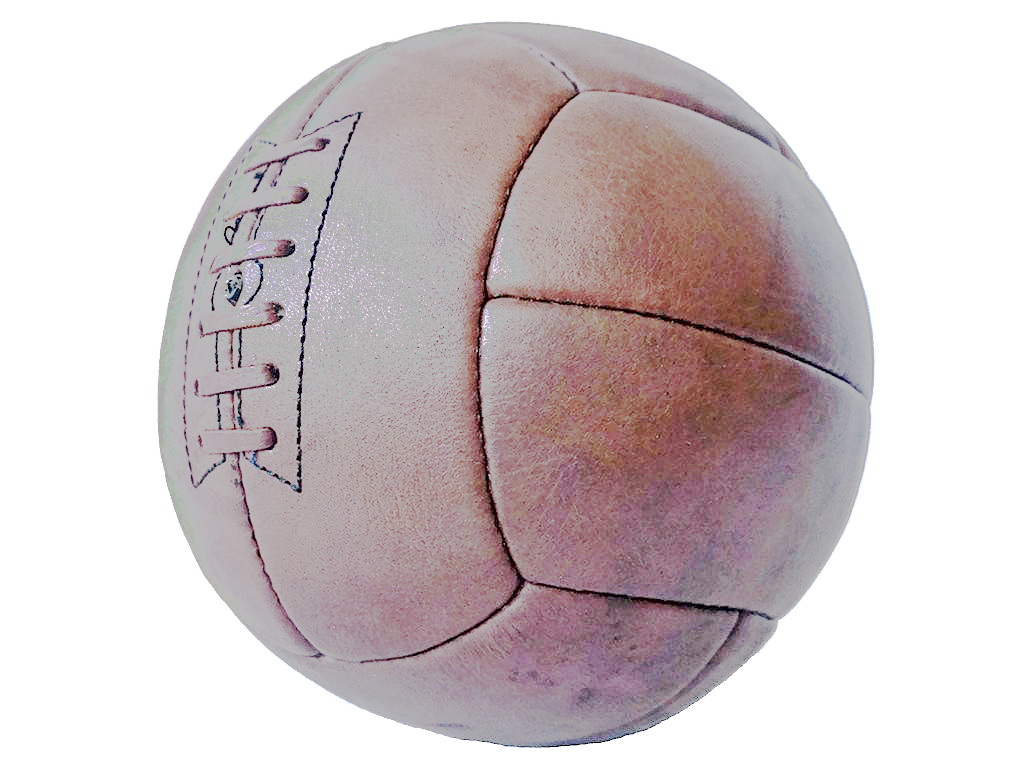 Before that, the sport balls had an external string to finish closing the leather casket that protected the air bladder. One would inflated the bladder, tied the laces and used a special tool that looked like a curved screwdriver with a hole at the end in order to conceal the lace’s ends. The end result was not very much spherical and the laces made the distribution of the weight uneven. The ball span in the air in a weird way and there was nothing predictable about its trajectory. Under wet conditions, it accumulated water and sometimes we had shots that looked like a sprinkler showering water all around. Many players left the ground with bleeding foreheads, following headings on the ball at the exact and unfortunate point where the laces were located.
But, back to ball manufacturing, think about it. A ball was manually sewed nearly completely inside out. However, at the very end, when just one segment of sewing is outstanding, the ball is turned inside out and the last inner bit must be sewed from the outside. A clever choreography of needles takes place to make it possible. Superball was the patent holder of this technology.
The genius behind the new ball, Sr Pinton, lived in Belo Horizonte until his passing away in the late 60s. After his death, the factory was managed by Leonidas Silva. I started working as a Manager Assistant, taking advantage of the fact that I lived a block away from the factory. I became the manager in 1974 and remained so until its closure in 1976.
A new company was founded in 1976 to produce sporting nets, initially located at the same plant at Rua Pouso Alegre: its name, Filo Industria e Comercio de Artigos Esportivos Ltda. The shop moved later on to Rua Tupis and stayed open for business, under my family’s control, until 1985. But this is another story, for another post.
The Ball of the 1950 World Cup in Brazil
We produced the Superball Double-T for many years before the equally famous G18 and G32 models superceded it. And I have always believed that the balls of the 1950 World Cup had been manufactured in the Horto factory by Sr. Pinton. But now, after a quick research, I found that, it is pretty much likely that they have been made by our sister factory in Niteroi.
 The Double-T was so called because of the appearance of its leather cuts. Each ball was made up by 12 of them. Each cut had the shape of a elongated C. Two cuts were sewed back-to-back together to form a sort of elongated sideways H, or more commonly described, a foot-against-foot double-T. Six double-Ts were then sewed in a cubic arrangement to produce the expected sphere. This design was an enormous improvement and allowed for more spherically shaped balls to be produced. The Double-T design combined with the invisible mouth feature transformed the Superball Double-T in a major success, being adopted by most football leagues is South America and around the world.
The Superball Double-T was used in all matches of the 1950 World Cup, including the final.
The Biggest “Zebra” in BH
I mentioned earlier that the factory was located at Rua Pouso Alegre, near the Independencia Stadium. That stadium was the largest in Belo Horizonte in 1950. It was the home ground of the Sete de Setembro Futebol Clube, the team that my father supported. As Belo Horizonte had been chosen to host some of the 1950 World Cup games, the Independencia Stadium happened to be the stage of one of the most incredible matches of World Cup history: England vs USA.
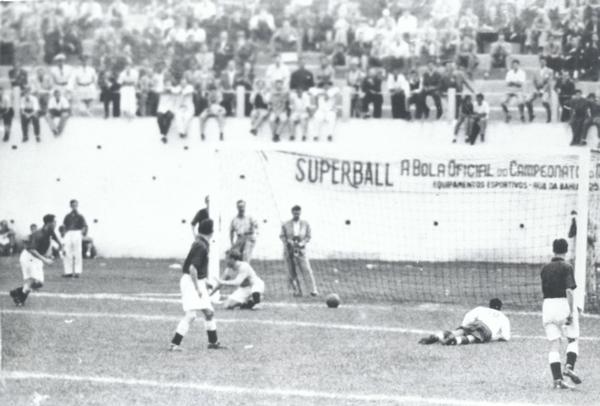
England was a footballing world power. They invented the game, for sod’s sake! USA was a bunch of amateurs, most of them “with proper jobs”, rather than full time professional players.
The match was mostly one sided. England attacking and USA defending. The only chance USA had to go on the England side… they scored a goal! Final score: 1-0 to the USA.
I have many friends in England that, when I mention where I come from, Belo Horizonte, they know of it because of this match.
Notice in the picture the exact moment when the USA scored. Notice the banner on the background. It reads “SUPERBALL – A bola oficial do campeonato do mundo” (the official ball of the world championship). My father was most certainly he who hanged it there with his own hands. He he he.
The Maracanazo
You know that a match is important when it receives a name. It is exactly the case of the World Cup final between Brazil and Uruguay, which took place in 16 July 1950, at the Maracana Stadium, Rio de Janeiro City. It hosted the biggest crowd ever for a football match: 200,000 people, the great majority by far Brazilians, who went to see their national team be World Champions for the first time in history. The hosting team was good and had impressed the world pundits with many comprehensive victories leading to that final. The confidence of the Brazilian public could not be higher up and victory was written in large letters in the horizon.
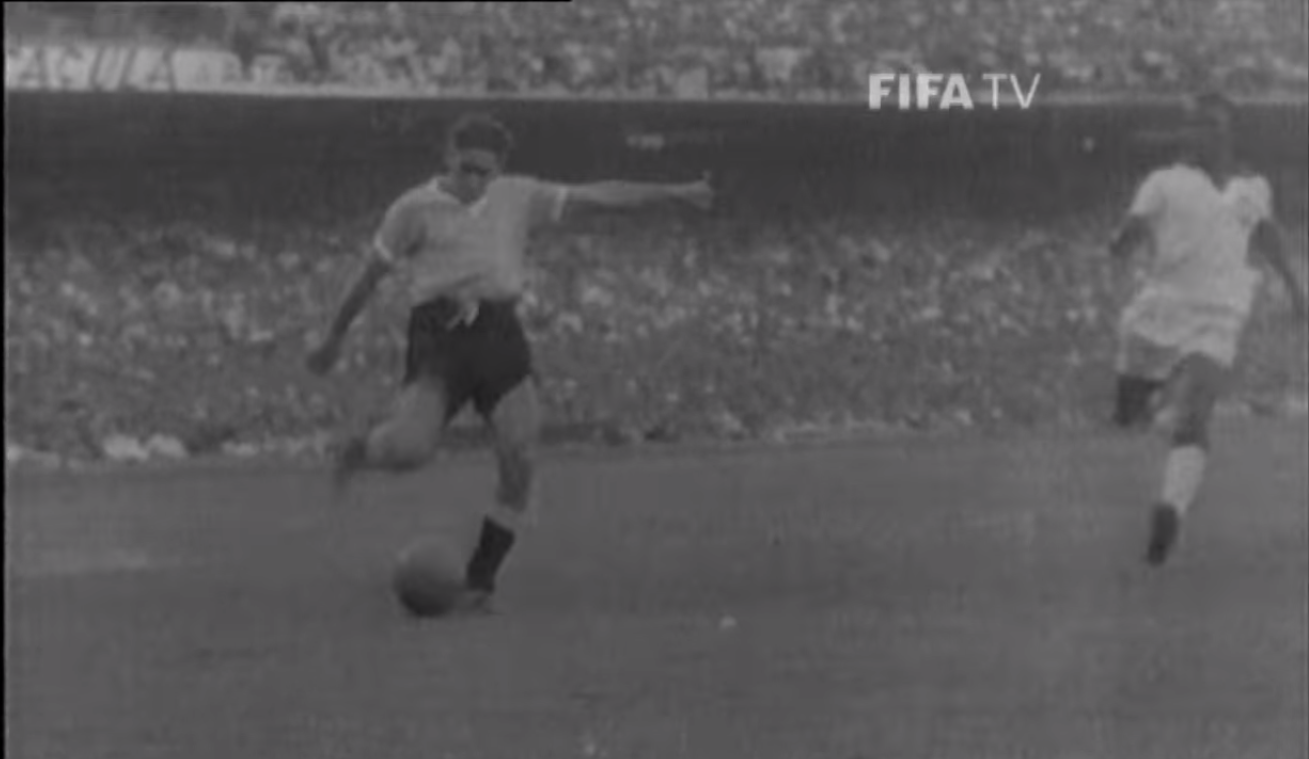 And more so, when Brazil scored first at the beginning of the second half.
It was not to be though.
Uruguay scored a tie and, with 11 minutes left, Alcides Ghiggia netted the Superball Double-T to the back of the net for the despair of the huge crowd of astonished Brazilians.
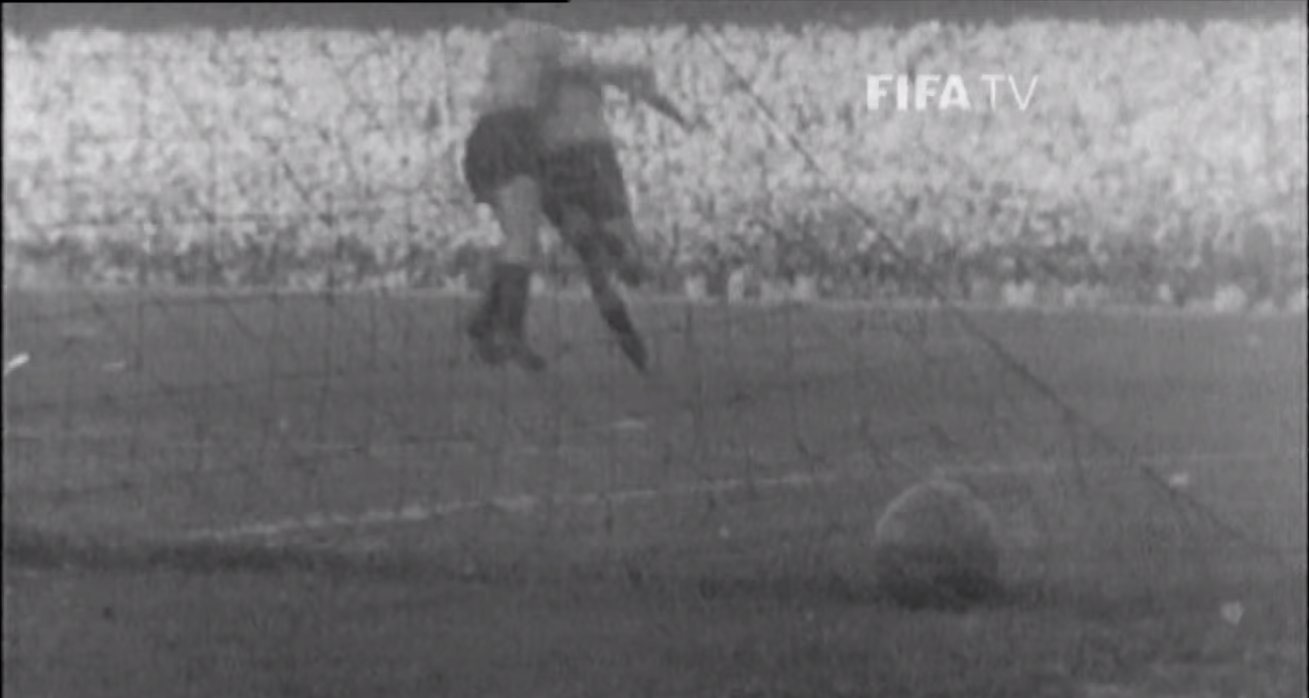 This was considered the biggest disaster in Brazil history for many years – that is, until the 7-1 defeat for Germany in 2014’s semifinal, I should say. The issue is somewhat controversial, surely.
So, What Happened to That Very Football?
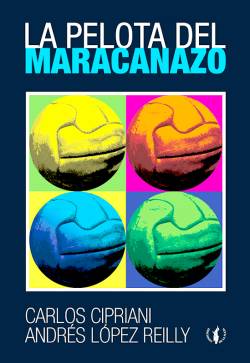 My research found some interesting data. Somebody else in Uruguay wrote a full book about the fate of the ball with which the Maracanazo was played. Apparently, it was taken to Uruguay by the goalkeeper Roque Maspoli, and given as a present to the Church of Saint Como, the Saint of the Impossible Causes.
From then on, the accounts diverge. There is a version that tells us that the priests lent the ball to local boys to play and they never returned it. Other account brings about the fact that many rich people used to donate valuable goods to the church, in exchange or in gratitude for “impossible” graces received. In consequence, the church attracted villains and robbers who, at some stage, stole the ball – together with the kit used by the midfielder Julio Perez in the Maracanazo. Nobody would know where the ball was until 32 years later, when it appeared in Brazil, in an auction in Rio Grande do Sul state. Reporters from Brazil and Uruguay investigated the claim that the ball was the real thing, but concluded that, in spite of been autographed by all players of the Uruguayan squad, that ball has never been played with, either in Maracana or anywhere else.
Controversially though, that ball had been placed on sale in London by Bonhams and, as a proof of its authenticity, Ghiggia declared on video that the ball was genuine. A buyer, identified simply as Henrique, paid the asked price of $1,800 and took ownership of the ball. The whole account is discussed in this blog.
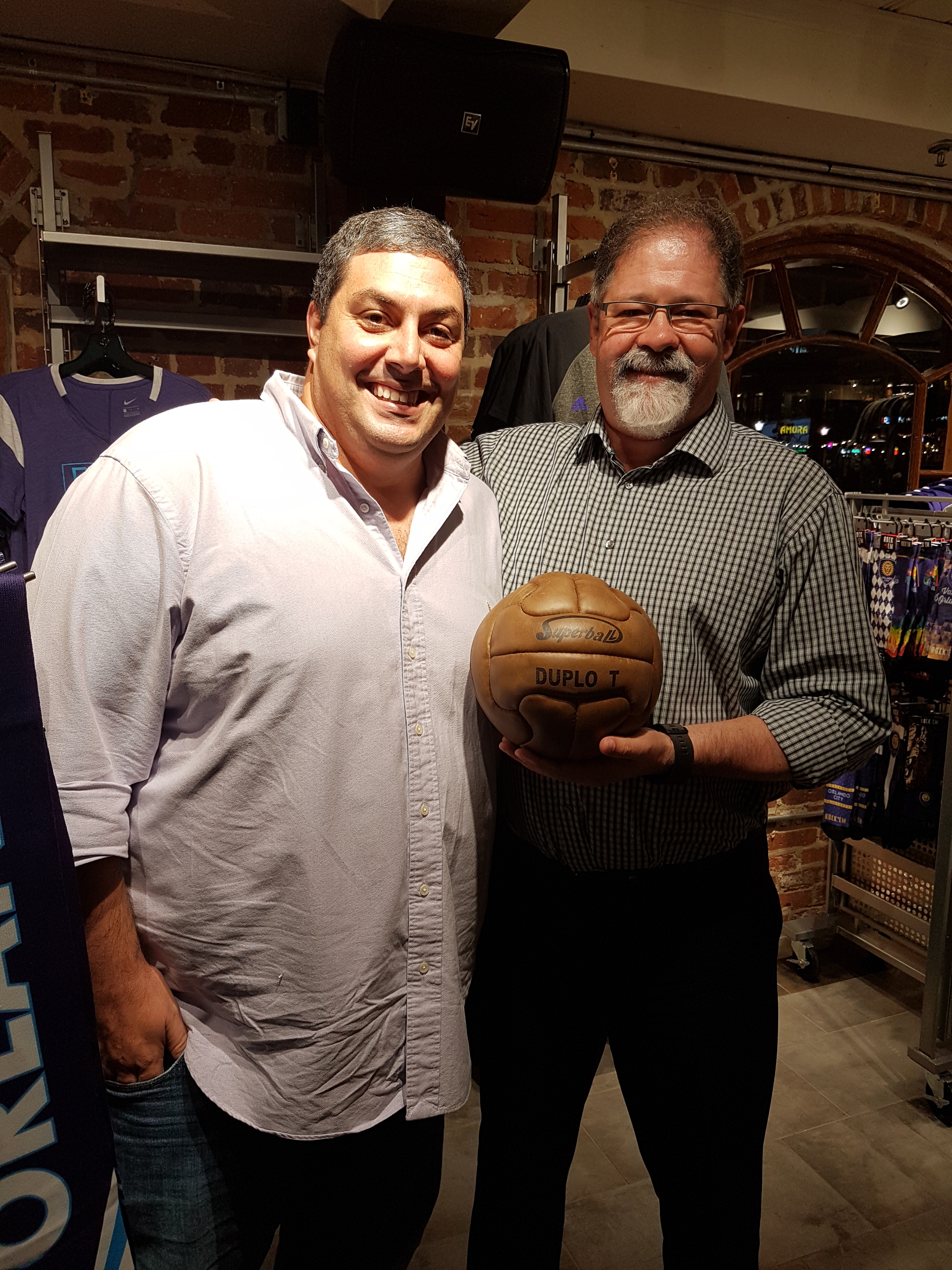 Nevertheless, given my involvement with Superball, Brazil and the ball manufacturing industry, Gustavo Fonseca graciously and magnanimously invited me to autograph the ball, during an extraordinarily pleasant evening at his restaurant in Florida. The ball had no signatures. I thought the honour tremendously undeserving, but it filled my heart with pride. I did so in memory of senor Luis Pinton, Dr. Edgar Leite de Castro, and especially, my father, Oswaldo Braga.
The ball, as well as many others, from all World Cups in history, can be found in exhibition at the Lion’s Pride. If you ever go to Orlando and you love football, it’s definitely worth a visit.
Related:
https://en.wikipedia.org/wiki/Uruguay_v_Brazil_(1950_FIFA_World_Cup)
 Sidetrack